
Statin Muscle Symptom Checker
Enter your latest Creatine Kinase (CK) level if known. Normal range is typically < 200 IU/L.
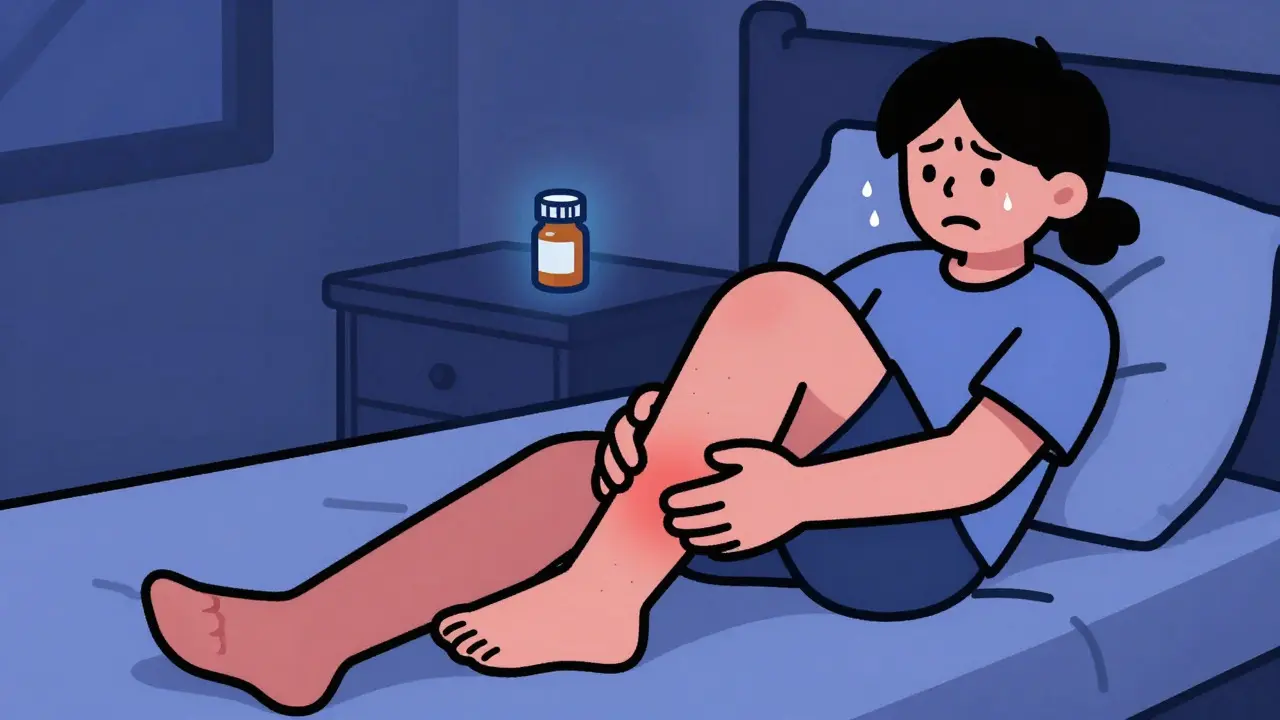
It’s 2 a.m., and your legs feel like they’re filled with concrete. You took your cholesterol pill yesterday, just like you do every day, but this time the ache in your calves won’t let you sleep. Is it just a bad workout? Or is that statin-induced muscle pain a spectrum of adverse muscular effects ranging from mild soreness to severe inflammation caused by HMG-CoA reductase inhibitors kicking in? If you’ve been prescribed a statin, you’re not alone in wondering if your muscles are paying the price for lower LDL.
Many people assume that if their muscles hurt, they should just stop the medication immediately. But here’s the catch: stopping abruptly can raise your risk of heart attack or stroke, especially if you’re high-risk. The key isn’t panic-it’s understanding what’s actually happening inside your body. Are you dealing with simple myalgia muscle pain without significant enzyme elevation, or something more serious like myositis muscle inflammation characterized by elevated creatine kinase levels? Knowing the difference changes everything about how you manage your treatment.
Key Takeaways
- Myalgia (pain only) affects up to 30% of users; myositis (inflammation) is rarer at ~0.5%.
- Creatine Kinase (CK) levels are the critical diagnostic marker: normal for myalgia, elevated for myositis.
- Don’t stop your statin without talking to your doctor; switching types or doses often resolves issues.
- Rare cases involve autoimmune reactions (anti-HMGCR myopathy) requiring specialized care.
- CoQ10 supplements may help some patients, though evidence is mixed.
What Is Actually Happening in Your Muscles?
To understand why statins cause pain, you have to look at what they do. Statins work by blocking an enzyme called HMG-CoA reductase the rate-limiting enzyme in cholesterol synthesis targeted by statin therapy. This lowers cholesterol production in the liver. However, this same pathway produces other molecules your muscles need to function properly, specifically Coenzyme Q10 a vital component of mitochondrial energy production in skeletal muscle.
When you take high-dose statins like simvastatin 40mg, studies show CoQ10 levels can drop by around 40%. Think of CoQ10 as the battery charger for your muscle cells. When the charge drops, your mitochondria produce less ATP (energy), leading to fatigue and cramping. Additionally, statins can disrupt protein prenylation, which leads to higher calcium levels inside muscle cells. This excess calcium activates enzymes that break down muscle proteins. It’s a bit like overworking a muscle until it tears, but on a cellular level.
For most people, this process is reversible. Once the statin effect wears off or the dose is adjusted, the pathways normalize. But for a small percentage, the immune system gets confused. In these rare cases, the body starts attacking its own muscle tissue, mistaking it for foreign material because of changes in the HMG-CoA reductase protein itself.
Myalgia vs. Myositis: Know the Difference
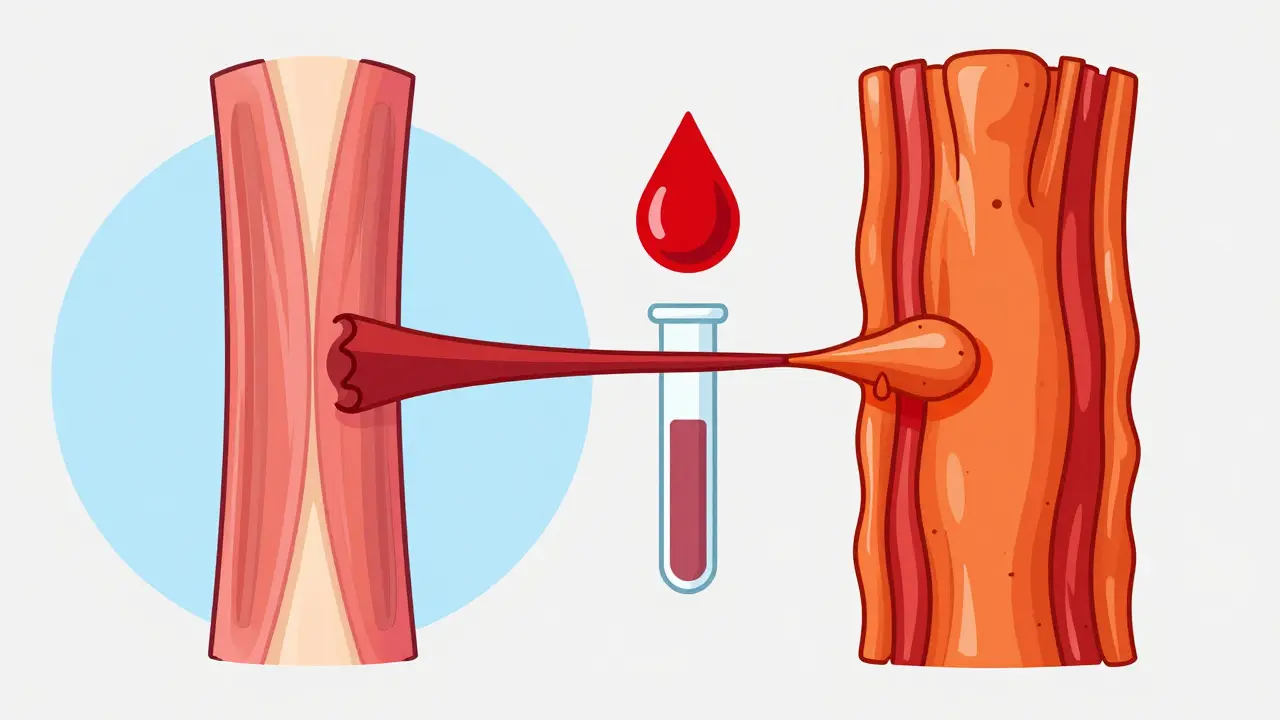
This is where confusion often sets in. Doctors use specific criteria to distinguish between benign pain and actual inflammation. The main differentiator is your Creatine Kinase (CK) level, an enzyme released when muscle tissue is damaged.
| Condition | Prevalence | CK Levels | Symptoms | Action Required |
|---|---|---|---|---|
| Myalgia | 10-30% | Normal (<10x ULN) | Pain, tenderness, no weakness | Monitor, adjust dose/type |
| Myositis | ~0.5% | Elevated (10-40x ULN) | Pain + Weakness | Stop statin, medical review |
| Rhabdomyolysis | <0.1% | Very High (>40x ULN) | Dark urine, severe pain, kidney risk | Emergency care |
| Autoimmune Myopathy | 2-3 per 100k | High (>2,000 IU/L) | Progressive weakness, persists after stopping | Immunosuppressive therapy |
If you have myalgia, your CK is normal. You feel sore, maybe tight, but you can still climb stairs and carry groceries. This is usually manageable. If you have myositis, your CK is elevated, and you’ll likely notice genuine weakness-like struggling to get out of a chair or lift your arms overhead. This requires immediate attention because unchecked inflammation can lead to rhabdomyolysis severe muscle breakdown releasing toxins into the blood, potentially causing acute kidney injury.
Why Some People Get It and Others Don’t
You might wonder why your neighbor takes the same statin without issue while you’re in agony. It comes down to genetics and interactions. One major factor is the SLCO1B1 gene a transporter gene variant that influences statin absorption and toxicity risk. Certain variants make your body absorb more of the drug, increasing exposure to muscle tissues. African Americans, for instance, have a statistically higher risk (1.8 times higher than Caucasians) due to genetic differences in how they metabolize these drugs.
Drug interactions also play a huge role. If you’re taking medications that inhibit the CYP3A4 enzyme (common in heart meds like amiodarone or certain antibiotics), your statin levels can spike by 300-500%. This sudden surge overwhelms your muscles’ ability to handle the metabolic shift. Always tell your pharmacist about every supplement and prescription you take.
Diagnosis: What Your Doctor Will Check
Don’t guess. Go to your GP or cardiologist. They will typically follow a structured approach:
- Blood Test for CK: This is the first line of defense. If it’s normal, it’s likely myalgia. If it’s high, they’ll investigate further.
- Thyroid and Vitamin D Checks: Low thyroid function or vitamin D deficiency can mimic statin side effects. Ruling these out is crucial.
- Medication Review: Checking for interacting drugs or recent increases in activity levels.
- Anti-HMGCR Antibody Test: If symptoms persist after stopping the statin for 3 months, they’ll test for the rare autoimmune form.
In complex cases, an electromyography (EMG) or muscle MRI might be used to visualize nerve and muscle health. A muscle biopsy is the gold standard for diagnosing the rare autoimmune necrotizing myopathy, showing specific patterns of cell death without typical inflammation.

Management Strategies That Work
The goal is to keep your heart protected without destroying your quality of life. Here are the most effective strategies based on current clinical guidance:
- Switch Statins: Not all statins are created equal. If you react to simvastatin, you might tolerate rosuvastatin or pravastatin. Studies show 73% of people who can’t tolerate one statin can tolerate another.
- Lower the Dose: Sometimes half the dose provides enough cardiovascular benefit with fewer side effects.
- Intermittent Dosing: Taking the statin every other day can reduce peak plasma levels while maintaining efficacy for some patients.
- CoQ10 Supplementation: While results vary, taking 200mg of CoQ10 daily may help replenish depleted levels. It’s low-risk and worth trying under supervision.
Avoid simply quitting cold turkey unless you have severe symptoms like dark urine or extreme weakness. For those few unlucky individuals with autoimmune myopathy, treatment involves immunosuppressants like prednisone or methotrexate, managed by a specialist.
Frequently Asked Questions
Should I stop my statin if my muscles hurt?
Not necessarily. If the pain is mild (myalgia), your doctor may suggest continuing while monitoring CK levels or switching to a different statin. Only stop immediately if you experience severe weakness, dark urine, or intense pain, as these could signal rhabdomyolysis.
How long does statin muscle pain last after stopping?
For typical myalgia, symptoms usually resolve within 1-2 weeks of discontinuation. However, for the rare autoimmune form (anti-HMGCR myopathy), symptoms can persist for 6-12 months or longer and require specific medical treatment beyond just stopping the drug.
Does CoQ10 really help with statin side effects?
Evidence is mixed. A Cochrane review found inconsistent results, with only 3 out of 7 trials showing significant improvement. However, since CoQ10 is naturally reduced by statins, supplementation is considered safe and may provide subjective relief for some patients, particularly those with documented low levels.
Can I take statins with other medications?
Yes, but caution is needed. Drugs that inhibit CYP3A4 (like certain antifungals, macrolide antibiotics, and amiodarone) can significantly increase statin levels, raising the risk of muscle damage. Always check for interactions with your pharmacist before starting new prescriptions.
Is statin-induced myositis permanent?
Typical statin-induced myositis is reversible once the drug is stopped or changed. However, the rare autoimmune variant (SAAM) can cause lasting weakness if not treated with immunosuppression. Early diagnosis improves outcomes, with complete remission rates of 65% if treated within 6 months of onset.