
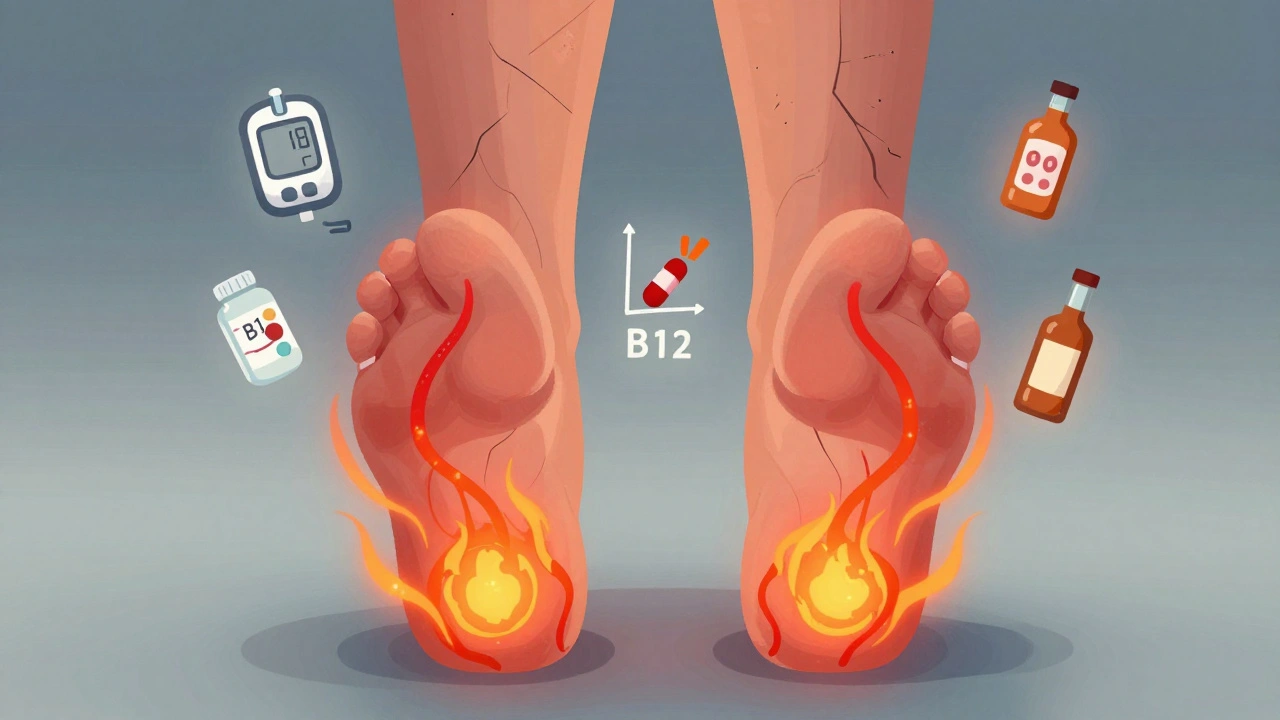
More than 20 million people in the U.S. live with peripheral neuropathy-a condition where nerves outside the brain and spinal cord get damaged. It doesn’t just cause numbness. For many, it’s a constant burning, stabbing, or tingling in the feet or hands that makes walking, sleeping, or even wearing shoes unbearable. The good news? You don’t have to just live with it. Understanding what’s causing your nerve damage and how to treat it can change everything.
What Exactly Is Peripheral Neuropathy?
Peripheral nerves are like electrical wires running from your spine to your fingers, toes, and organs. When they’re damaged, signals get scrambled. You might feel pain where there’s none, or lose sensation entirely-like not feeling a blister forming on your foot until it’s infected.
This isn’t one disease. There are over 100 types, but they fall into three main patterns:
- Mononeuropathy: One nerve affected-like carpal tunnel in the wrist.
- Multiple mononeuropathy: Two or more separate nerves damaged.
- Polyneuropathy: Widespread damage, most common-often starting in both feet and moving upward.
Most people with polyneuropathy report symptoms beginning in their feet. The numbness creeps up slowly. At first, you might just think it’s aging. But if you’re regularly dropping things, tripping over nothing, or waking up with burning feet, it’s not normal.
What Causes Nerve Damage?
Diabetes is the biggest culprit. About half of all people with diabetes develop some form of nerve damage over time. High blood sugar slowly poisons nerves, especially in the legs and feet. Keeping your HbA1c below 7% can cut your risk of neuropathy by 60%-but only if you maintain it for years.
Other major causes:
- Vitamin B12 deficiency: Common in older adults, vegetarians, and people with stomach issues. It damages the protective coating around nerves. A simple blood test can catch this. Treatment? Daily B12 shots or high-dose pills-symptoms often improve in 4 to 8 weeks.
- Chemotherapy: Drugs like vincristine and paclitaxel hurt nerves in 30-40% of cancer patients. Sometimes the damage is permanent, but early intervention helps.
- Alcohol abuse: Chronic drinking directly poisons nerves and often comes with poor nutrition, making it worse.
- Autoimmune diseases: Conditions like Guillain-Barré or lupus cause the body to attack its own nerves.
- Infections: Shingles (postherpetic neuralgia), HIV, and Lyme disease can trigger neuropathy.
- Idiopathic: About 20% of cases have no clear cause-even after full testing. That’s frustrating, but not hopeless.
Some causes are reversible. Fix the B12 deficiency? Nerves can heal. Control diabetes? Progress slows. But if you wait too long, damage becomes permanent.
How Is It Diagnosed?
Most people wait 18 months before getting a proper diagnosis. That’s too long. Early detection means better outcomes.
Doctors start with a physical exam: checking reflexes, testing sensation with a soft nylon filament (10-gram monofilament), and using a 128-Hz tuning fork to test vibration sense. If those are abnormal, you’ll likely get:
- Nerve conduction studies: Measures how fast electrical signals move through nerves. Normal speed is above 50 m/s. Slower than 40 m/s? Nerve damage.
- Quantitative sensory testing: Uses machines to test how you respond to heat, cold, or vibration.
- Blood tests: For diabetes, B12, thyroid, kidney function, and autoimmune markers.
These tests aren’t perfect, but together they give a clear picture. Don’t let a doctor brush off your symptoms as "just aging." If your feet feel like they’re on fire and you can’t feel your toes, get tested.
How Is the Pain Managed?
There’s no magic cure-but there are proven ways to reduce pain and keep things from getting worse.
Medications That Work
Over-the-counter painkillers like ibuprofen or acetaminophen? They barely help. Neuropathic pain doesn’t respond like a headache. You need targeted drugs:
- Pregabalin (Lyrica): Reduces pain by 50% in about 37% of users. Common side effects: dizziness, weight gain, swelling. Starts working in days, but you may need to build up to 300-600 mg daily.
- Duloxetine (Cymbalta): An antidepressant that also blocks pain signals. Helps 35% of people. Side effects: nausea, fatigue, dry mouth. Takes 2-4 weeks to kick in.
- Amitriptyline: An older tricyclic antidepressant. Works for 41% of patients. But it’s a heavy hitter: 75% get dry mouth, 60% feel drowsy. Best taken at night.
These aren’t painkillers like opioids. They work on the nervous system itself. That’s why they’re more effective-but also why side effects are common. About 65% of people stop one of these meds within 3 months because of how they feel.
Non-Drug Treatments That Actually Help
Many people find better results without pills-or use these to reduce their dosage.
- Scrambler therapy: A machine sends mild electrical signals to "trick" the brain into thinking it’s not in pain. After 10 sessions, 85% of patients report 50% pain reduction. Cost? Around $1,200-$1,500 total. Not covered by all insurance, but worth asking about.
- Spinal cord stimulation: A tiny device implanted near the spine sends pulses that block pain signals. Works for 65% of people who haven’t responded to other treatments. Used for severe, long-term cases.
- Physical therapy: Focuses on balance, strength, and mobility. After 12 weeks of therapy, people improve their "timed up and go" test by 25%. That means fewer falls. Custom orthotics? 82% of users say they make walking possible again.
- Qutenza patch: A high-dose capsaicin patch applied in a doctor’s office. One 30-minute treatment lasts up to 3 months. Reduces pain by 31% on average. Expensive ($1,000+ per patch), but no daily pills.
People on Reddit’s r/neuropathy say the biggest win? Foot care. Checking feet twice a day for cuts, blisters, or redness. Wearing thick, soft socks. Avoiding barefoot walking. These simple habits prevent amputations.
Why Opioids Are a Bad Idea
Some doctors still prescribe opioids for neuropathic pain. Don’t let them. Studies show opioids only reduce pain by 30% in these cases-and over 15% of long-term users become addicted. The risk far outweighs the benefit. The American Academy of Neurology and Harvard Health both warn against it.
There are safer, more effective tools. Use them.
What You Can Do Right Now
If you have symptoms, don’t wait. Here’s what to do:
- See a neurologist if your primary doctor dismisses you. Ask for nerve conduction studies.
- Get blood tests: Check HbA1c, B12, thyroid, and kidney function.
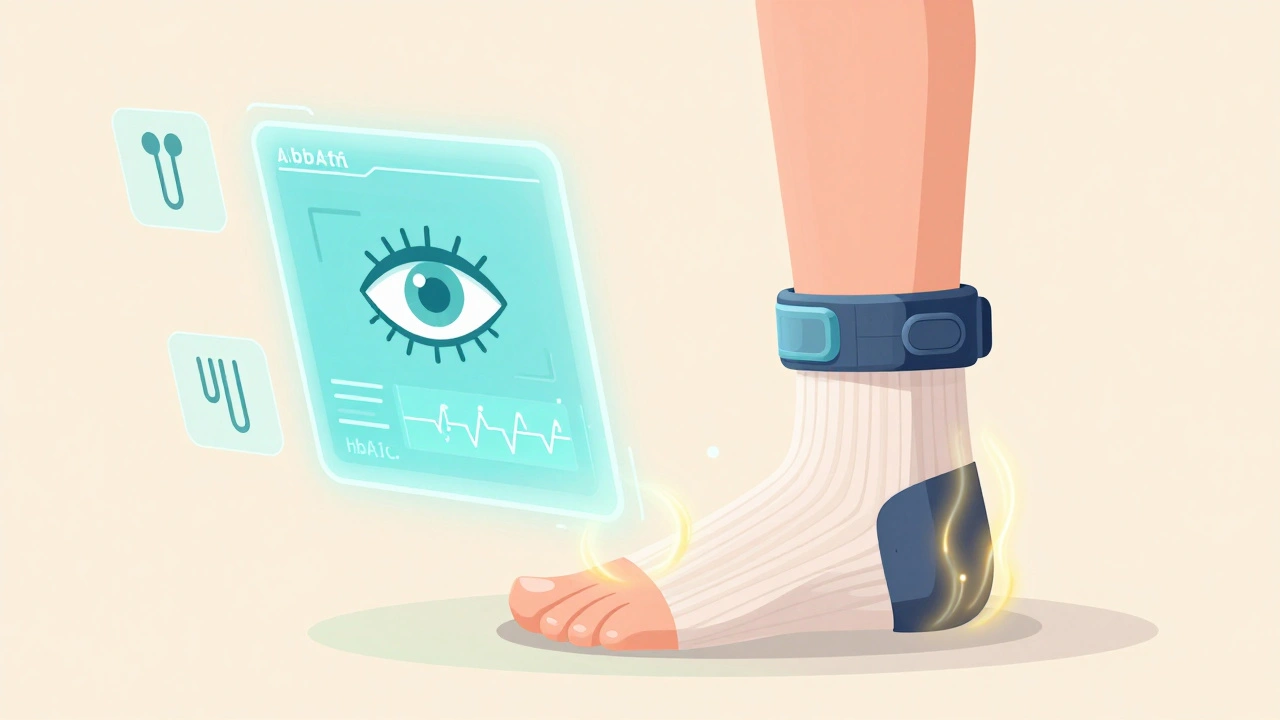
- Start foot inspections: Look in the mirror or use a hand mirror every morning and night. No excuses.
- Control blood sugar: If you’re diabetic, aim for HbA1c under 7%. Even small drops help.
- Try physical therapy: Ask your doctor for a referral. Balance training is life-changing.
- Ask about scrambler therapy: It’s not widely known, but it works for many.
And if you’re already on meds and they’re not working-or you’re too sick from side effects-talk to your doctor about switching. There are options.
What’s Coming Next?
Research is moving fast. The "Neuropathy Genomics Project" launched in 2023 aims to identify genetic causes for over 50 types by 2026. Early trials of gene therapy for inherited neuropathies show promise. Wearable nerve stimulators are expected to hit the market in 2024.
AI tools are being trained to spot early nerve damage from simple foot scans or gait analysis. That could cut diagnosis time from 18 months to under 6 months.
For now, the best tools are still the ones we have: early diagnosis, treating the root cause, and using the right combination of meds, therapy, and self-care.
You’re not alone. More than 20 million people live with this. But with the right approach, you can still walk, sleep, and live well.
Can peripheral neuropathy be reversed?
It depends on the cause. If it’s from B12 deficiency, alcohol abuse, or early-stage diabetes, nerves can regenerate if the trigger is removed and controlled. But if damage has been ongoing for years-especially with high blood sugar or chemotherapy-the nerve cells may be too damaged to fully recover. Early treatment is key: starting within 6 months of symptoms improves healing chances by 40%.
Is peripheral neuropathy the same as carpal tunnel?
Carpal tunnel is a type of peripheral neuropathy-it’s damage to the median nerve in the wrist. But not all neuropathy is carpal tunnel. Carpal tunnel affects one nerve and usually only the hand. Peripheral neuropathy often involves multiple nerves, especially in the feet, and can be caused by diabetes, vitamins, or autoimmune disease. So carpal tunnel is one kind; peripheral neuropathy is the bigger category.
Why do my feet burn at night?
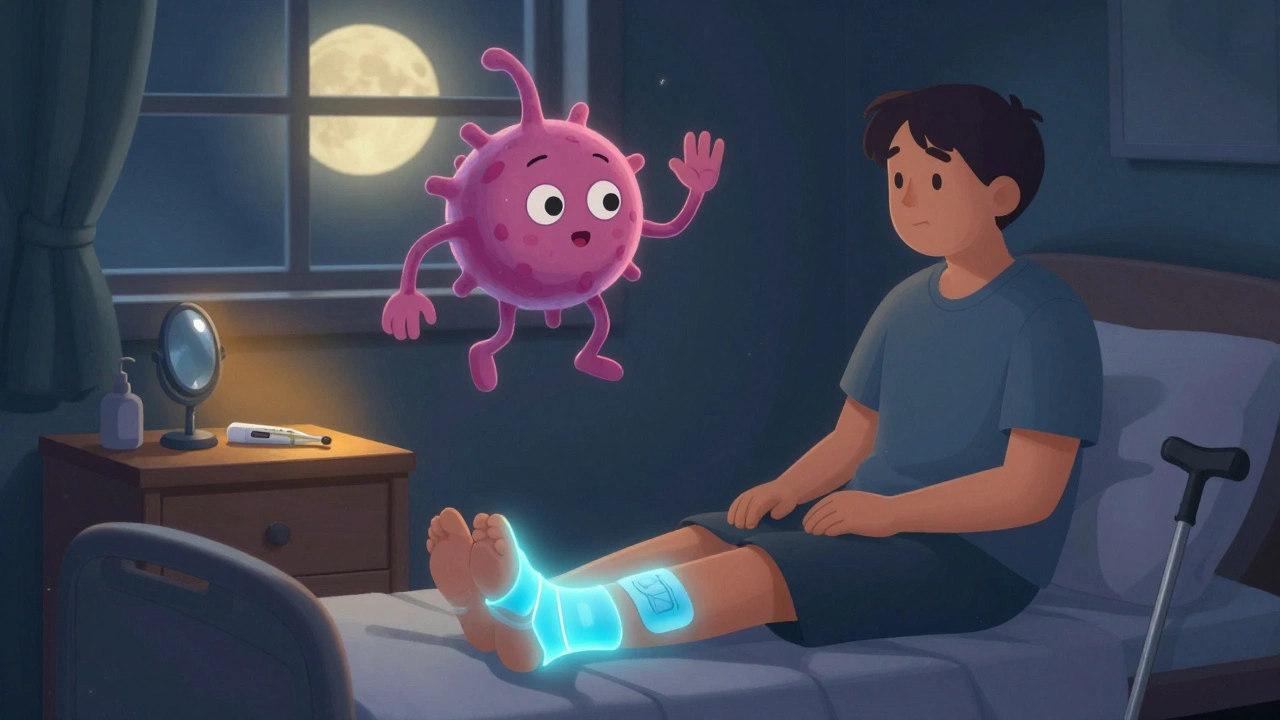
Nerve damage messes with how your brain interprets signals. At night, when you’re quiet and not distracted, those abnormal signals become louder. Burning, tingling, or electric shocks are classic signs of damaged sensory nerves. This is especially common in diabetic neuropathy. Cooling your feet with a fan, wearing light socks, or using a prescription cream like capsaicin can help.
Can I still drive with peripheral neuropathy?
It depends. If you have numbness in your feet, you may not feel the gas or brake pedal properly. Some people report accidents or near-misses. If you’re on meds like pregabalin that cause dizziness, driving is risky. Talk to your doctor. Consider adaptive pedals or avoid driving at night. Safety comes first.
What’s the best footwear for neuropathy?
Look for shoes with a wide toe box, no seams inside, cushioned soles, and firm heel support. Avoid flip-flops, high heels, or tight shoes. Therapeutic shoes with custom orthotics are best-82% of users report fewer sores and better balance. Medicare and some insurance plans cover them if you have diabetes and a doctor’s note.
Does exercise help peripheral neuropathy?
Yes-especially walking, swimming, and cycling. Exercise improves blood flow to nerves, helps control blood sugar, and strengthens muscles to compensate for lost sensation. Aim for 30 minutes most days. Balance exercises like standing on one foot (with support) reduce fall risk by 30%. Always check your feet before and after.
How long does it take for neuropathy treatments to work?
It varies. B12 shots show improvement in 4-8 weeks. Blood sugar control takes 3-6 months to stabilize symptoms. Medications like pregabalin or duloxetine usually take 2-4 weeks. Scrambler therapy needs 10 sessions over 2-3 weeks. Physical therapy shows results in 8-12 weeks. Patience is needed-but don’t wait too long to start.
Next Steps If You’re Struggling
If you’ve been diagnosed and feel stuck:
- Join a support group like the Foundation for Peripheral Neuropathy’s "Neuropathy Now" program. Talking to others who get it helps.
- Ask your doctor about a referral to a pain specialist or neurologist who focuses on neuropathy.
- Keep a symptom journal: note pain levels, triggers, meds, and sleep. It helps your doctor adjust treatment.
- Don’t give up on finding the right combo. What works for one person might not work for you-but there’s always another option.
Peripheral neuropathy doesn’t have to define your life. With the right care, many people go from barely walking to hiking, dancing, or playing with their grandchildren again. Start with one step-get tested. Then another-take care of your feet. Then another-talk to your doctor about alternatives to pills. You’ve got this.
Comments (14)
Haley P Law
December 9, 2025 AT 17:40I swear my feet have been on fire for YEARS and I thought it was just old age 😭 Finally got tested and it was diabetic neuropathy. B12 shots changed my life. Also, Qutenza patch? Magic. I cry every time I put it on because it’s the first time in 5 years I slept through the night. 🥲
Carina M
December 9, 2025 AT 22:09It is, of course, imperative to acknowledge that the medical literature unequivocally supports the primacy of etiological intervention over symptomatic palliation in the management of peripheral neuropathy. To advocate for pharmacological palliation without first ruling out reversible etiologies-such as vitamin deficiency or metabolic dysregulation-is, frankly, medically negligent.
Ajit Kumar Singh
December 10, 2025 AT 14:02In India we dont have access to these fancy patches or scrambler therapy but we have turmeric milk and yoga and if you dont believe me just ask your grandma she will slap you with a wooden spoon and say back in my day we had no medicine but we walked barefoot on cow dung and lived till 90
Lisa Whitesel
December 12, 2025 AT 05:17Another person who thinks ibuprofen is a cure. The fact that you’re even considering OTC meds for neuropathic pain suggests you’ve never read a single peer-reviewed paper. Stop self-diagnosing. Get a neurologist. Or don’t. Your feet will fall off eventually.
Larry Lieberman
December 13, 2025 AT 20:17I tried pregabalin and it made me feel like a zombie who lost his WiFi 😵💫 But then I found out my B12 was at 150 and after 3 months of shots? I can feel my toes again. Like, literally. I hugged my dog and he knew I was crying. 🐶❤️
Courtney Black
December 14, 2025 AT 23:18There is a fundamental existential paradox embedded in the modern medical approach to neuropathy: we treat symptoms with chemicals while ignoring the systemic collapse that produced them. The body does not malfunction-it communicates. Your burning feet are not a glitch. They are a cry. A plea. A metaphysical whisper from the periphery of your being, begging you to stop ignoring the silence between your breaths.
iswarya bala
December 15, 2025 AT 23:59omg i had this for 2 years and no doc would listen till i went to a naturopath and she said ur B12 is lower than my exs heart 😭 i started eating eggs and lentils and now i can walk without screaming. thank u for this post u saved my life
Tim Tinh
December 17, 2025 AT 01:59Hey I’ve been through this too. Started with numb toes, ended up tripping over air. Got the nerve test, found out I had prediabetes. Cut out soda, started walking 20 mins a day, and now I’m off meds. Not saying it’s easy, but it’s worth it. You got this. And yeah, those thick socks? Non-negotiable. 🧦
Asset Finance Komrade
December 17, 2025 AT 18:20One must question the epistemological validity of attributing therapeutic efficacy to scrambler therapy when the placebo effect in chronic pain conditions is empirically documented at 60–70%. The commodification of hope via $1,500 patches is less a medical advancement than a neoliberal exploitation of suffering.
Lauren Dare
December 19, 2025 AT 16:25Oh wow, another ‘try this magic patch’ post. Because clearly, the answer to decades of neurological degeneration is a $1,000 sticker. Meanwhile, the 70% of people who don’t respond to any of this are just… supposed to die quietly?
Taya Rtichsheva
December 21, 2025 AT 16:18i just use a fan on my feet at night and call it a day honestly who even has time for all this
Christian Landry
December 23, 2025 AT 11:27my mom had this after chemo and she swears by the physical therapy. she says the balance stuff felt weird at first but now she can dance with her grandkids again. also-wear socks with grip on the bottom. game changer. 🧦✨
Katie Harrison
December 23, 2025 AT 14:08I appreciate the thoroughness of this post. However, I must emphasize that the omission of mitochondrial support therapies-such as CoQ10, ALA, and NAD+ precursors-is a significant oversight. These are not fringe supplements; they are foundational in nerve repair protocols, particularly in chemotherapy-induced neuropathy. I recommend consulting a functional neurologist who understands bioenergetic medicine.
Mona Schmidt
December 24, 2025 AT 06:31This is one of the most accurate, compassionate, and clinically grounded summaries I’ve seen on this topic. Thank you for including the nuances-especially the distinction between reversible and irreversible damage. Too many posts oversimplify neuropathy into a ‘take this pill’ narrative. This is what education should look like.