

Diarrhea is more than just an inconvenience; it is your body’s way of flushing out irritants. But when that process turns into a relentless cycle of bathroom trips, over-the-counter (OTC) medications can offer relief. The key isn't just grabbing the first box you see on the shelf-it’s knowing which one works for your specific symptoms and, crucially, when to stop self-medicating and call a professional.
In this guide, we break down the two main OTC options available in the UK and US: loperamide (often sold as Imodium) and bismuth subsalicylate (found in Pepto-Bismol). We’ll look at how they work, who should avoid them, and the red flags that mean you need medical attention immediately.
Understanding Your Options: Loperamide vs. Bismuth Subsalicylate
Not all anti-diarrheals are created equal. They work through completely different mechanisms, making one better for certain situations than the other. Choosing the right one depends on whether you need to stop the flow quickly or if you’re dealing with stomach upset alongside loose stools.
| Feature | Loperamide (Imodium) | Bismuth Subsalicylate (Pepto-Bismol) |
|---|---|---|
| Mechanism | Slows gut movement by binding to opioid receptors in the intestine | Coats GI mucosa, absorbs toxins, reduces inflammation, and kills bacteria |
| Best For | Pure watery diarrhea, urgent symptom control, traveler's diarrhea prevention | Diarrhea with nausea, cramps, or mild inflammatory causes |
| Onset of Action | 30-60 minutes | Variable, often slower but broader effect |
| Side Effects | Constipation, dizziness, potential cardiac issues at high doses | Temporary blackening of tongue and stool, tinnitus (if overdosed) |
| Avoid If | Bloody stools, fever >100.4°F (38°C), children under 12 (without advice) | Allergy to aspirin/salicylates, blood thinners use, gout |
Loperamide is a synthetic opioid agonist that does not cross the blood-brain barrier at standard doses. It works by slowing down the contractions of your intestinal muscles. This increases transit time, allowing your colon to absorb more water from the stool, which firms it up. According to NHS clinical data from 2023, it can increase intestinal transit time by 50-70%. It is highly effective for reducing stool frequency, with studies showing a 62% reduction within 24 hours compared to placebo.
Bismuth subsalicylate, on the other hand, takes a multi-pronged approach. It contains salicylate (related to aspirin) and bismuth. It coats the lining of your stomach and intestines, absorbs toxins produced by bacteria, and has mild antimicrobial properties against common pathogens like E. coli and Campylobacter. A 2019 study in the Journal of Antimicrobial Chemotherapy confirmed its effectiveness against these specific strains. While it might not stop diarrhea as aggressively as loperamide, it helps with associated symptoms like nausea and cramping.
How to Take OTC Medications Safely
Using these drugs correctly is vital. Overdoing it can lead to severe complications, including constipation or even heart rhythm problems in extreme cases. Always follow the label instructions strictly.
Loperamide Dosage Guidelines
- Adults: Take 4mg after the first loose stool, then 2mg after each subsequent episode.
- Maximum Dose: Do not exceed 8mg in 24 hours without a doctor’s supervision. The FDA issued warnings in 2016 regarding cardiac events linked to excessive dosing (some users took up to 100mg/day to self-treat withdrawal).
- Children: Approved for ages 6+ in liquid form and 12+ in caplets/tablets in the US. In the UK, check local guidelines as age restrictions may vary slightly, but generally, consult a pharmacist for under-12s.
Bismuth Subsalicylate Dosage Guidelines
- Adults: Take 2 tablets or 30mL of liquid every 30-60 minutes as needed, up to 8 doses in 24 hours.
- Children: Generally recommended for ages 12 and older. Avoid in children under 12 due to the risk of Reye’s syndrome, a rare but serious condition linked to salicylates.
- Note: Expect your stool and tongue to turn black. This is harmless and temporary, caused by the reaction between bismuth and sulfur in your digestive tract.
Never combine these medications unless directed by a healthcare provider. Mixing them can increase the risk of side effects without providing additional benefit. Also, remember that these drugs treat symptoms, not the underlying cause. If you have an infection, stopping the diarrhea too abruptly can trap the pathogen inside your body.

Hydration: The Unsung Hero of Recovery
Medication alone won’t cure you if you’re dehydrated. Diarrhea causes significant fluid and electrolyte loss. The World Health Organization (WHO) recommends oral rehydration solutions (ORS) containing specific amounts of sodium (75mmol/L) and glucose. These solutions help your intestines absorb water more efficiently than plain water.
If you don’t have ORS packets, you can make a simple version at home: mix 1 liter of clean water with 6 teaspoons of sugar and half a teaspoon of salt. Sip slowly throughout the day. Avoid sugary sodas, fruit juices, and caffeine, as these can worsen diarrhea by drawing more water into your gut.
Dietary Adjustments During Recovery
What you eat matters. During the acute phase (the first 24-48 hours), stick to bland, easy-to-digest foods. The BRAT diet-Bananas, Rice, Applesauce, and Toast-is a classic recommendation for a reason. These foods are low in fiber and fat, which means they’re gentle on your stomach and help bulk up stool.
Avoid dairy products temporarily, as lactose intolerance can develop after a bout of gastroenteritis. High-fiber foods, spicy dishes, and fatty meals can also irritate your gut further. As your symptoms improve, gradually reintroduce normal foods to prevent nutrient deficiencies.
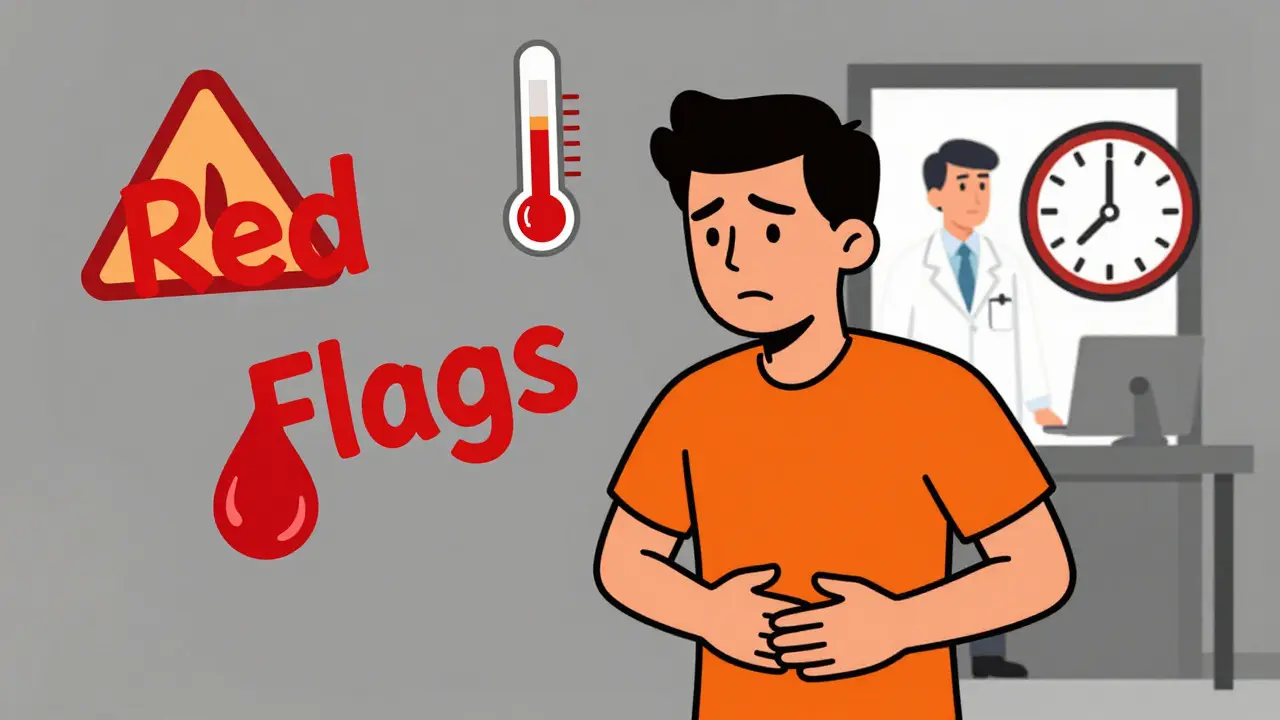
Red Flags: When to Stop Self-Treating and See a Doctor
This is the most critical part of managing diarrhea at home. OTC meds are for mild, short-term cases. If you ignore warning signs, you could mask a serious condition like appendicitis, inflammatory bowel disease (IBD), or a severe bacterial infection.
Contact a healthcare provider immediately if you experience any of the following:
- Bloody or Black Stools: Blood indicates inflammation or bleeding in the digestive tract. Black, tarry stools (not from bismuth) suggest upper GI bleeding.
- High Fever: A temperature above 100.4°F (38°C) suggests an infectious cause that may require antibiotics.
- Severe Abdominal Pain: Cramping is normal, but sharp, persistent, or localized pain is not.
- Signs of Dehydration: Dark urine, dry mouth, dizziness, or decreased urination (<0.5mL/kg/hour).
- Prolonged Duration: Diarrhea lasting more than 48 hours in adults or 24 hours in children.
- Recent Antibiotic Use: This could indicate C. difficile infection, which requires specific treatment.
The American Gastroenterological Association warns that using anti-diarrheals in the presence of fever or bloody stools can prolong the infection by trapping pathogens inside the intestine. In such cases, letting your body flush the invader is safer than stopping the flow.
Special Considerations for Travelers
If you’re traveling internationally, especially to regions with lower sanitation standards, traveler’s diarrhea is a real risk. It affects 20-50% of international travelers, according to the CDC Yellow Book 2024. Bismuth subsalicylate can be used prophylactically (taken before symptoms start) to reduce risk by 65%, as shown in a 2022 study in the Journal of Travel Medicine.
However, always consult a travel medicine specialist before your trip. They might recommend carrying a prescription antibiotic for severe cases, as OTC meds alone may not suffice for bacterial infections common in certain destinations.
Can I take loperamide if I have a fever?
Generally, no. A fever above 100.4°F (38°C) suggests an infectious cause. Taking loperamide can trap the bacteria or virus in your gut, potentially worsening the infection. Consult a doctor instead.
Why did my stool turn black after taking Pepto-Bismol?
This is a harmless side effect. The bismuth in the medication reacts with sulfur in your digestive system to form bismuth sulfide, which is black. It will return to normal color once you stop taking the drug.
Is it safe to give OTC diarrhea meds to children?
Use caution. Loperamide is approved for children aged 6+ in some formulations, but many experts advise against it for young children due to the risk of paralytic ileus. Bismuth subsalicylate should be avoided in children under 12 due to Reye’s syndrome risk. Always consult a pediatrician first.
How long should I wait before seeing a doctor?
If diarrhea lasts more than 48 hours in adults or 24 hours in children, seek medical advice. Seek immediate care if you have bloody stools, high fever, severe pain, or signs of dehydration.
Can I drink alcohol while taking anti-diarrheals?
It’s best to avoid alcohol. It can dehydrate you further and irritate your stomach lining, counteracting the benefits of the medication. Stick to water, oral rehydration solutions, or clear broths.