
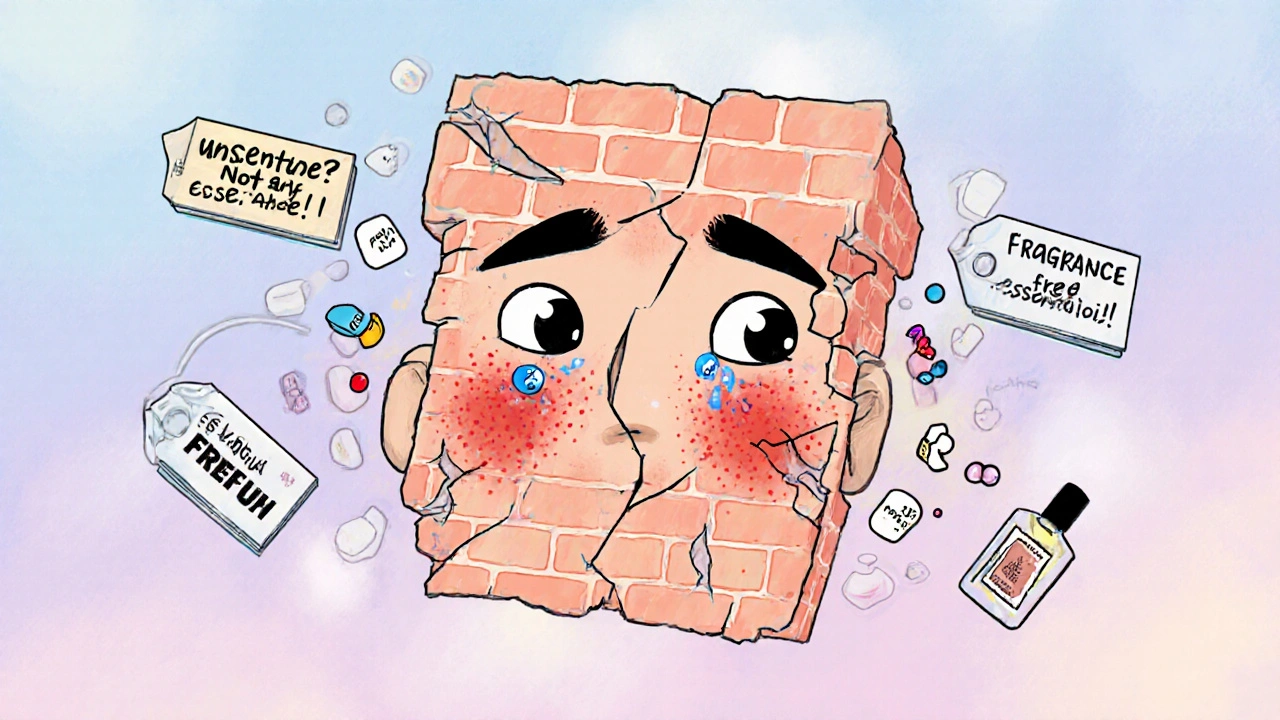
If your skin stings when you apply moisturizer, turns red after washing your face, or breaks out without any obvious reason, you’re not alone. Millions of people deal with sensitive skin every day-and many of them are reacting to something hidden in their products: fragrance.
Why Fragrance Is the #1 Trigger for Sensitive Skin
Fragrance isn’t just about smell. In skincare, it’s one of the most common irritants out there. The American Contact Dermatitis Society found that fragrance compounds cause 30-45% of all allergic reactions from cosmetics. That’s nearly half. And it doesn’t matter if the label says “natural” or “essential oils.” Lavender, citrus, or tea tree oil can be just as bad as synthetic perfumes for sensitive skin. Your skin’s barrier is like a brick wall. When it’s healthy, it keeps out irritants. But when it’s damaged-by over-cleansing, harsh chemicals, or yes, fragrance-it becomes porous. That’s when things like fragrance molecules slip in and trigger inflammation. The result? Redness, itching, burning, and flaking. Dermatologists agree: if you have sensitive skin, ditching fragrance is the single most effective step you can take. Dr. Whitney Bowe, a board-certified dermatologist, says fragrance is responsible for 38% of allergic contact dermatitis cases she sees in her practice. Dr. Sandy Skotnicki’s research showed that removing fragrance cuts inflammatory markers in the skin by 57%.Fragrance-Free vs. Unscented: What’s the Difference?
Don’t be fooled by labels. “Unscented” doesn’t mean fragrance-free. It often means the product has a masking fragrance added to cover up the smell of other ingredients. You’re still being exposed to irritants. True “fragrance-free” means zero added scent compounds-no parfum, no aroma, no essential oils. That’s the standard dermatologists recommend. Look for these exact words on the ingredient list: no fragrance, no parfum, no aroma. If you see any of those terms, walk away. A 2023 analysis by Pretty Farm Girl found that 68% of products labeled “natural” still contain hidden fragrance. Even products marketed for sensitive skin aren’t always safe. Cleure’s testing showed 58% of “hypoallergenic” products still had undisclosed fragrance ingredients.What Makes a Fragrance-Free Product Actually Work?
Not all fragrance-free products are created equal. Some are just plain boring. Others actually help your skin heal. Here’s what to look for:- Ceramides (0.5-3%): These are the glue that holds your skin barrier together. Products with ceramides help repair damage and lock in moisture.
- Hyaluronic acid (0.5-2%): Draws water into the skin without clogging pores.
- Glycerin (3-10%): A humectant that keeps skin soft and hydrated.
- Mineral sunscreen (zinc oxide, SPF 30+): Chemical sunscreens often contain fragrance and irritants. Stick to zinc oxide-it’s gentle and effective.
- Low ingredient count: 15 ingredients or fewer. Fewer ingredients = fewer chances for irritation.
- pH 4.5-5.5: Matches your skin’s natural acid mantle. Products outside this range can strip your skin.
How to Test a New Product Safely
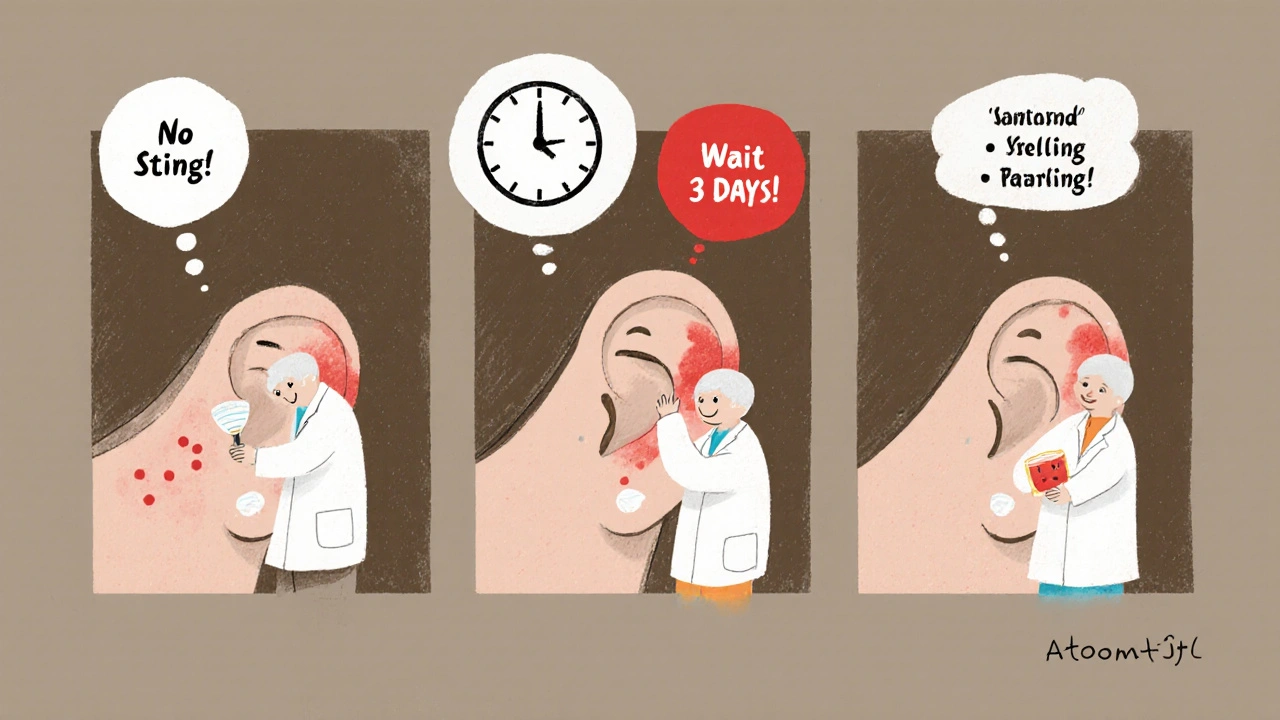
Never apply a new product straight to your face. Even if it’s labeled “fragrance-free,” your skin might still react. Here’s the simple, dermatologist-approved method:- Wash a small area behind your ear with water and pat dry.
- Apply a pea-sized amount of the product to that spot.
- Leave it on for 72 hours. Don’t wash it off.
- Check for redness, itching, swelling, or flaking.
The Minimalist Fragrance-Free Routine
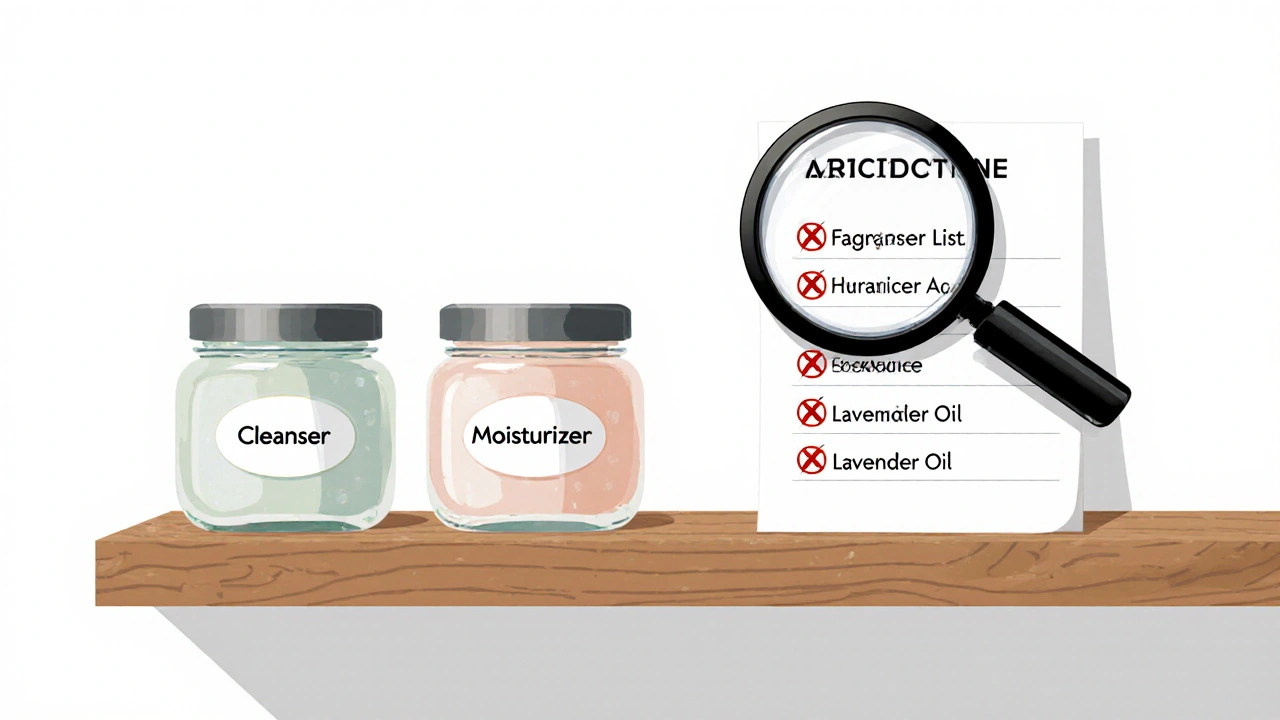
You don’t need 10 products. You need three:- Cleanser: Use once a day, preferably at night. Look for a gentle balm or cream cleanser. SVR’s SENSIFINE Cleansing Balm removes 98.7% of makeup while keeping skin 82% hydrated after 24 hours. Most conventional cleansers drop to 65-70%.
- Moisturizer: Apply to damp skin within 30 seconds of washing. This locks in water. CeraVe, Vanicream, and Cleure are top choices. Avoid anything with alcohol, menthol, or witch hazel.
- Sunscreen: Mineral-based only. Zinc oxide or titanium dioxide. Avoid chemical filters like oxybenzone. Reapply every 2 hours if you’re outside.
What Users Actually Experience
Real people, real results. On Reddit’s r/SkincareAddiction, 78% of users with sensitive skin say they saw major improvement within 4-6 weeks of switching to fragrance-free products. The top complaints? Redness dropped by 83%, and skin stopped reacting to weather changes, pollution, or even laundry detergent. One user on Skincare.com documented a 62% reduction in skin tightness after cleansing and a 47% increase in hydration after just 7 days. Morning redness? Gone. But it’s not all perfect. About 54% of users say fragrance-free products feel “clinical” or “bland.” No lavender scent. No citrus zing. That’s the trade-off. Your skin might not feel luxurious-but it won’t burn, either. Amazon reviews for Vanicream show 89% of 5-star ratings mention “no reactions” or “saved my skin.” The negative reviews? Mostly about texture-not effectiveness.What to Avoid
Even if it’s marketed for sensitive skin, avoid these ingredients:- Fragrance / Parfum / Aroma
- Essential oils (lavender, eucalyptus, peppermint, etc.)
- Alcohol denat. (drying)
- Menthol or camphor (tingling = irritation)
- Witch hazel (often contains alcohol)
- Sulfates (SLS, SLES)-too harsh for compromised skin
Tools to Help You Choose
There are resources to make this easier:- National Eczema Association’s Product Verification App: Lists over 1,200 certified fragrance-free products. Used by more than 285,000 people.
- Dermstore’s Fragrance-Free Certification: Tests products in independent labs to confirm zero fragrance.
- INCI Decoder: Free website that translates ingredient labels. Look for “parfum,” “fragrance,” or “essential oil.”
The Bigger Picture: Why This Isn’t Just a Trend
The fragrance-free skincare market hit $3.8 billion in 2023 and is growing at 17% a year-more than double the overall skincare industry. Why? Because people are learning the truth: fragrance isn’t luxury. It’s a risk. In the U.S., 87% of dermatologists keep fragrance-free samples in their offices. In Europe, the law requires brands to list 26 specific fragrance allergens. In California, a new bill (AB 1234) is being reviewed that would force full disclosure of every single fragrance ingredient. This isn’t about being “clean” or “green.” It’s about science. Your skin is an organ. And like any organ, it doesn’t need unnecessary toxins.Final Thought: Less Is More
You don’t need a 10-step routine to have healthy skin. You need a simple, consistent one that doesn’t attack your barrier. Start with one cleanser. One moisturizer. One sunscreen. All fragrance-free. Patch test everything. Wait. Observe. Listen to your skin. If it stops stinging, stops turning red, stops feeling tight-you’ve found your routine. And you didn’t need a fancy bottle or a sweet smell to get there.Frequently Asked Questions
Can I still use essential oils if I have sensitive skin?
No. Essential oils like lavender, tea tree, or citrus are plant-based but still act as irritants. Studies show they trigger reactions in up to 22% of people with sensitive skin. Even if a product says “natural,” if it contains essential oils, it’s not safe for reactive skin.
Why do some fragrance-free products still make my skin feel tight?
That usually means the product is missing key barrier-repairing ingredients like ceramides or hyaluronic acid. Some fragrance-free products just remove the scent but leave out the healing components. Look for products that list ceramides, glycerin, or niacinamide-not just “fragrance-free.”
Is fragrance-free skincare more expensive?
Yes, on average. Fragrance-free products cost about $28.50 compared to $22.75 for regular ones. But you’re paying for fewer ingredients, rigorous testing, and clinical backing. Many users find they use less product because it’s more effective, so the cost evens out over time.
How long does it take to see results with a fragrance-free routine?
Most people notice less redness and stinging within 2-4 weeks. Full barrier repair can take 6-8 weeks. Be patient. Your skin has been damaged over time, and healing takes consistent care.
Can I use fragrance-free products if I don’t have sensitive skin?
Absolutely. Fragrance-free products are gentler and less likely to cause irritation, even for normal skin. Many people switch because they want fewer chemicals, not because they have a diagnosis. It’s a smart, preventive choice.
What’s the best way to read a skincare ingredient list?
Look for these words: fragrance, parfum, aroma, essential oil, or any oil ending in “-ol” (like linalool, geraniol)-these are fragrance allergens. Also check for alcohol denat., sulfates, and menthol. If you see them, skip it. Use INCI Decoder to help decode labels.
Comments (12)
Evelyn Shaller-Auslander
November 27, 2025 AT 19:12i tried a new cleanser and my face lit up like a christmas tree 😅 guess i didn't patch test... lesson learned.
Gus Fosarolli
November 28, 2025 AT 16:19fragrance-free doesn't mean 'boring as a spreadsheet'-it means 'my face isn't screaming for mercy.'
also, essential oils are just nature's way of saying 'i hate you.' 🌿😤
Nirmal Jaysval
November 29, 2025 AT 01:06u guys overthink this. i use coconut oil and i fine. no fancy ceramides needed. skin is just weak now days.
Emily Rose
November 29, 2025 AT 10:23THIS. I spent 3 years trying every 'gentle' product until I read the ingredient list. Turns out 'natural lavender scent' = chemical warfare on my barrier.
Switched to Vanicream and my skin finally stopped acting like a toddler with a tantrum. No more redness. No more burning. Just peace.
Also, patch testing isn't optional-it's your skin’s last chance to survive your shopping habits.
Benedict Dy
November 30, 2025 AT 19:51The data presented here is statistically significant, particularly regarding the 57% reduction in inflammatory markers. However, the sampling bias toward Reddit and Skincare.com users introduces selection bias. The claim that 78% of users improved lacks a control group. Additionally, the $28.50 average price point for fragrance-free products is misleading without adjusting for regional purchasing power or product volume.
While the conclusion is valid, the methodology lacks rigor.
John Power
December 1, 2025 AT 00:18man i used to think 'fragrance-free' meant 'smells like hospital soap'... until my skin stopped feeling like it was being sandblasted every morning.
now i just slap on CeraVe and go. no drama. no stinging. just calm skin.
also, zinc oxide sunscreen is a miracle worker. no more ghostly white cast either-new formulas are legit.
Scott McKenzie
December 2, 2025 AT 05:38patch test, patch test, patch test 🧪❤️
my friend thought she was safe because it said 'for sensitive skin'... 3 days later she looked like a tomato with eyebrows.
now she carries a tiny jar of Vanicream everywhere. like a superhero with moisturizer.
also-INCI Decoder is my bestie. saved my face more times than i can count 😇
Jeremy Mattocks
December 2, 2025 AT 22:57Let me tell you, I used to be one of those people who thought fragrance-free meant 'no soul.' I wanted my moisturizer to smell like a tropical vacation, not a pharmacy shelf. But after 14 months of red, flaky, angry skin-after trying every 'gentle' product with lavender, chamomile, and 'natural botanical extracts'-I finally listened to the dermatologists.
It took me 6 weeks to even notice a difference. My skin didn’t magically heal overnight. It was slow. Boring. Unsexy.
But then, one morning, I woke up and my face didn’t feel like it had been rubbed with sandpaper. No tightness. No itching. Just... normal. Like my skin had been asleep and finally woke up.
Now I don’t care if my lotion smells like nothing. I care that I can wear makeup without crying. That I can go outside without my cheeks turning into road flares. That I don’t have to avoid laundry detergent like it’s radioactive.
This isn’t a trend. It’s survival. And honestly? The simplicity is kind of beautiful. Less stuff. Less stress. Just skin, healing itself.
Also, I bought the Cleure trial kit. Worth every penny. Even the samples felt like a hug for my face.
Paul Baker
December 3, 2025 AT 19:41fridge free is the real MVP
used to love that citrus scent till my face looked like a tomato after a sauna
now i just use ceraVe and dont even think about it
also i use the inci decoder app its like having a translator for your face lol
Zack Harmon
December 4, 2025 AT 10:36THIS IS A CULT. A BEAUTY CULT. People are acting like fragrance-free is some holy grail. You think your skin is 'damaged'? Maybe you just have bad genes or you're overwashing.
Essential oils aren't evil-they're natural! You're scared of plants now? 🤡
And don't even get me started on 'clinical' products. Who wants to feel like they're getting a medical treatment before bed?
This whole movement is just fear marketing dressed up as science.
Jeremy S.
December 4, 2025 AT 11:32my skin used to break out from soap. now i use one cleanser, one moisturizer, one sunscreen.
no drama. no fuss. just works.
also, patch testing is non-negotiable. i learned the hard way.
Jill Ann Hays
December 6, 2025 AT 02:06The paradigm shift toward fragrance-free skincare reflects a broader epistemological reorientation in dermatological consumerism wherein the aesthetic imperative is subordinated to physiological integrity
One must interrogate the semiotics of 'natural' and 'gentle' as ideological constructs perpetuated by neoliberal beauty capitalism
True skin health emerges not from product consumption but from epistemic humility-the recognition that less is ontologically superior to more