
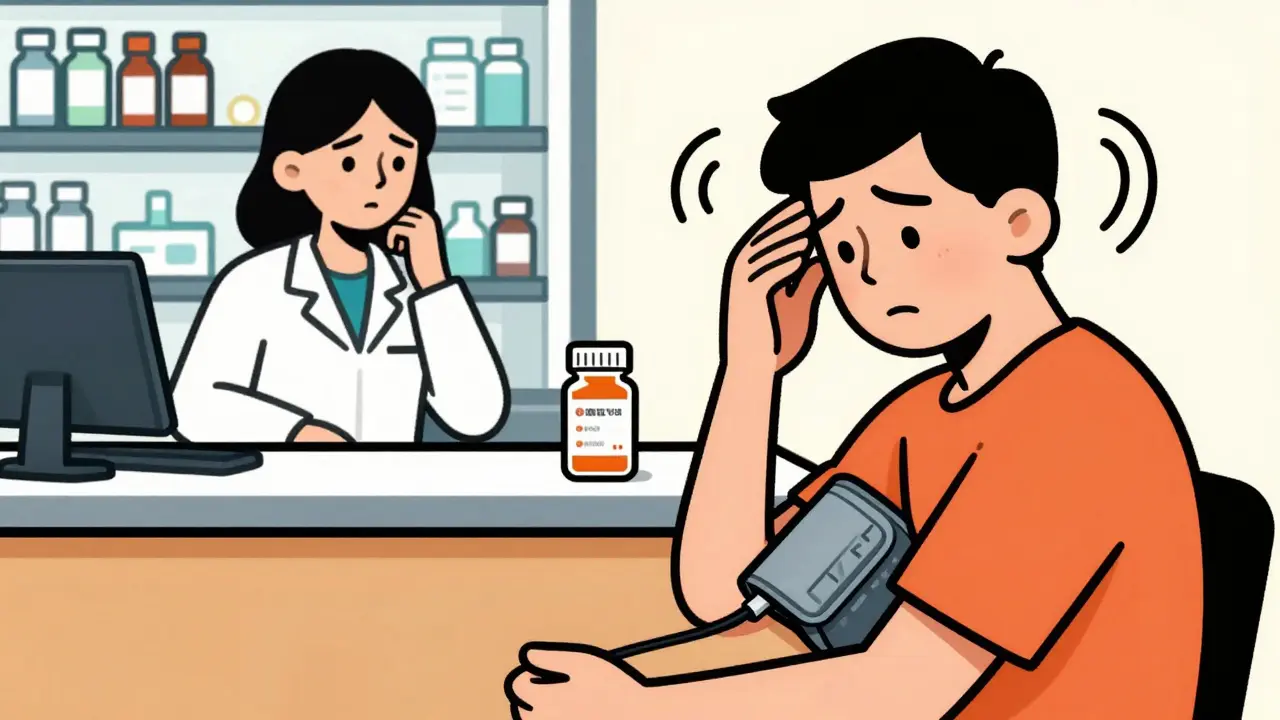
Imagine a patient comes into your pharmacy complaining of severe dizziness after switching to a new brand of blood pressure medication. It’s a generic version of the drug they’ve taken for years without issue. Is it just a coincidence? Or is there a subtle difference in the formulation causing harm? This scenario highlights a critical gap in our healthcare system: the under-reporting of adverse events associated with generic medications. Pharmacists are uniquely positioned to spot these issues, yet many remain silent due to time constraints or uncertainty about their obligations.
The assumption that generic drugs are identical to their brand-name counterparts in every way is dangerous. While active ingredients must be bioequivalent, inactive ingredients-excipients like fillers, binders, and dyes-can vary significantly between manufacturers. These differences can trigger allergic reactions, alter absorption rates, or cause unexpected side effects in sensitive patients. When these events go unreported, regulatory bodies like the U.S. Food and Drug Administration (FDA) miss crucial data needed to protect public health.
Understanding the Scope of Pharmacist Responsibility
Pharmacists serve as the frontline defense in pharmacovigilance, which is the science and activities relating to the detection, assessment, understanding, and prevention of adverse effects or any other drug-related problems. An Adverse Drug Reaction (ADR) is formally defined by organizations like the Ontario College of Pharmacists as "a harmful and unintended effect from use of a health product". This definition is broad but specific enough to guide clinical judgment.
Your responsibility doesn’t end at dispensing. It extends to monitoring how patients react to those dispensed medications, especially generics. Regulatory frameworks have evolved significantly since the 1962 Kefauver-Harris Amendments, which first mandated rigorous post-market surveillance. Today, while federal U.S. law does not strictly mandate individual healthcare professionals to report all adverse events, professional guidelines and state-specific regulations often do. For instance, in British Columbia, Section 12(7) of the Health Professions Act Bylaws explicitly requires pharmacists to notify practitioners, update electronic records, and report reactions to Health Canada. In New Jersey, consultant pharmacists must document errors and reactions in medical records before the end of their shift.
Even where mandatory reporting isn't codified in federal statute, the ethical obligation remains clear. The American Society of Health-System Pharmacists (ASHP) emphasizes that pharmacists possess the unique clinical training to identify drug mechanisms and therapeutic outcomes that prescribers might overlook. You are the expert on the medication itself; therefore, you are best equipped to recognize when a medication fails its primary promise of safety.
The Hidden Risks of Generic Medications
Why focus specifically on generics? Because they represent the majority of prescriptions filled today. However, they also present unique challenges for safety monitoring. Dr. Michael Cohen, President of the Institute for Safe Medication Practices, notes that generic adverse events are particularly tricky because clinicians often assume therapeutic equivalence means identical safety profiles. This assumption leads to dismissal of patient complaints as "nocebo effects" or unrelated conditions.
Consider excipients. A patient may tolerate lactose in one manufacturer’s tablet but experience gastrointestinal distress with another’s. Or, a dye used in a generic capsule could trigger anaphylaxis in someone with a rare allergy. These are not theoretical risks. They happen daily. Yet, because the active ingredient is the same, these signals get lost in the noise unless a vigilant pharmacist flags them.
| Factor | Brand Name Drug | Generic Drug | Reporting Implication |
|---|---|---|---|
| Active Ingredient | Original proprietary formula | Bioequivalent to brand | Differences in efficacy rarely reported; assumed equal. |
| Inactive Ingredients (Excipients) | Fixed formulation | Varies by manufacturer | Critical: Allergies/intolerances here require specific reporting to link reaction to manufacturer. |
| Packaging | Distinctive branding | May resemble other drugs | Medication errors due to look-alike/sound-alike packaging need immediate reporting. |
| Release Mechanism | Proprietary delivery system | Must mimic brand release rate | Subtle changes in absorption can cause toxicity or sub-therapeutic levels; monitor closely. |
When a patient reports a new side effect after switching manufacturers, do not dismiss it. Document the specific manufacturer, lot number if available, and the nature of the reaction. This granularity is what allows regulators to trace patterns back to specific production batches or formulations.

Navigating Regulatory Landscapes and Reporting Systems
The landscape of adverse event reporting is fragmented. In the United States, the primary database is the FDA Adverse Event Reporting System (FAERS). Established decades ago, FAERS collects reports from healthcare professionals, consumers, and manufacturers. Approximately 98% of reports entering FAERS come from pharmaceutical manufacturers, who receive initial tips from providers like you. However, direct reporting by pharmacists is vital for speed and accuracy.
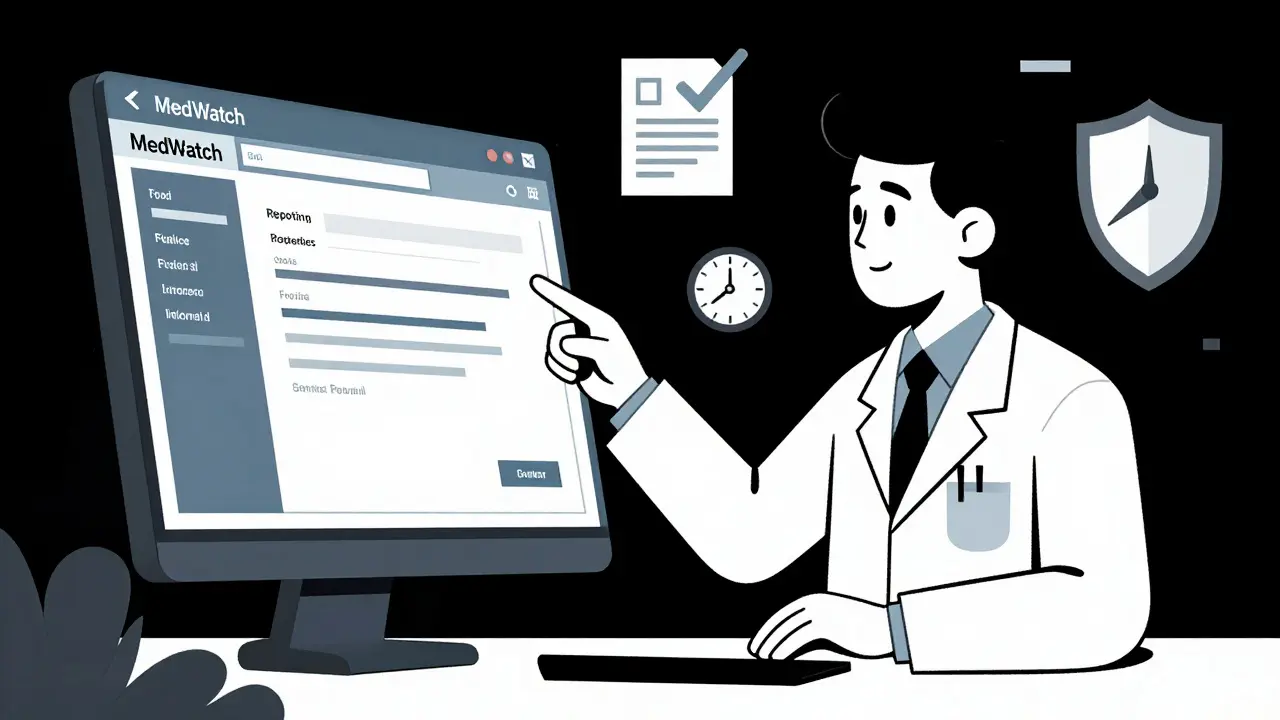
You can submit reports via MedWatch, the FDA's safety information and adverse event reporting program. Historically, this involved paper forms, which created a massive barrier to entry. Today, the MedWatch Online portal allows for direct electronic submission. Data from 2023 shows that 43% of healthcare professional reports now use this digital route, up from 29% in 2020. This shift is crucial for reducing the friction that discourages reporting.
Internationally, the standards are even stricter. The European Medicines Agency (EMA) implemented mandatory ADR reporting for all healthcare professionals in 2012, resulting in a 220% increase in reporting rates. North America is slowly catching up. The National Association of Boards of Pharmacy (NABP) has partnered with 32 state boards to integrate reporting functionality directly into pharmacy practice management software. Pilot programs in California and Texas showed a 40% reduction in reporting time, making it feasible for busy community pharmacists to comply without sacrificing workflow efficiency.
Overcoming Barriers: Time, Training, and Technology
Let’s address the elephant in the room: time. A 2021 survey by the National Community Pharmacists Association revealed that 78% of pharmacists spend 15-30 minutes per adverse event report. With high prescription volumes, finding half an hour to fill out a form feels impossible. Consequently, 62% cited insufficient work hours as the primary barrier to reporting.
This is why technology integration is not just a convenience; it’s a necessity. If your pharmacy management system doesn’t have a built-in reporting module, advocate for one. Look for systems that allow you to flag a prescription as "potential ADR" with a few clicks, auto-populating patient demographics and medication details. This reduces manual data entry, which is the most tedious part of the process.
Training is another hurdle. Many pharmacists struggle to distinguish between expected side effects and true adverse reactions. Expected side effects, like dry mouth from anticholinergics, are common and usually benign. An adverse reaction is unexpected, harmful, and potentially serious. Serious adverse events are defined as those resulting in death, life-threatening conditions, hospitalization, persistent disability, or congenital anomalies. If you’re unsure, err on the side of caution and report it. Regulators prefer false positives over missed signals.
Furthermore, lack of awareness contributes to under-reporting. Health Canada estimates that only 5-10% of all adverse drug reactions are reported officially. For generics, this number might be even lower. We must normalize the conversation. Encourage your staff to ask patients, "How are you feeling since starting this new medication?" during pick-up. Simple questions can uncover hidden issues.
Best Practices for Effective Reporting
To make your reporting impactful, follow these concrete steps:
- Identify the Signal: Listen for keywords like "new," "worse," "different," or "since I switched." Pay attention to non-verbal cues such as hesitation or visible discomfort.
- Gather Specifics: Record the patient’s name, age, gender, and medical history. Note the exact medication name, strength, dosage form, manufacturer, and lot number. Describe the reaction in detail: onset time, severity, duration, and outcome.
- Assess Causality: Use tools like the Naranjo Algorithm if available, but rely on your clinical judgment. Did the reaction resolve upon discontinuation? Did it recur upon re-challenge?
- Document Internally: Make an entry in the patient’s profile. This creates a record for future reference and alerts other healthcare providers.
- Submit Externally: Use MedWatch Online or your integrated system. If reporting to a manufacturer, ensure you include contact information so they can follow up for additional details.
A 2022 study in the Journal of the American Pharmacists Association found that pharmacist-led initiatives increased adverse event documentation by 37%. This proves that structured approaches work. Don’t wait for a crisis. Build a culture of safety in your pharmacy where reporting is seen as a core part of patient care, not an administrative burden.
The Future of Pharmacovigilance
The trend is moving toward greater accountability and technological support. The FDA’s Sentinel Initiative is expanding to include community pharmacy data sources for active pharmacovigilance. This means real-time analysis of prescription fills and subsequent health outcomes. Imagine a system that automatically flags unusual clusters of headaches among patients taking a specific generic NSAID. That’s the future we’re building.
Industry analysts predict that by 2025, a significant majority of U.S. states will adopt formal requirements for pharmacist ADR reporting, mirroring models like British Columbia’s. As these mandates take hold, pharmacies that have already established robust reporting protocols will have a competitive advantage. They will be safer, more compliant, and more trusted by their communities.
Remember, every report you file adds a piece to the puzzle of medication safety. One report might seem insignificant, but aggregated data saves lives. When you report a reaction to a generic statin, you help prevent heart attacks in thousands of others. Your role is not just to dispense pills; it is to guard the gateway to safe therapy.
Is adverse event reporting mandatory for pharmacists in the US?
Federal law does not universally mandate individual healthcare professionals to report adverse events, though the FDA strongly encourages it. However, specific states and professional boards may have stricter requirements. For example, New Jersey requires consultant pharmacists to report defects and reactions. Always check your local state board of pharmacy regulations for specific legal obligations.
What is the difference between a side effect and an adverse drug reaction?
A side effect is a known, often predictable, and usually mild effect of a medication (e.g., drowsiness from antihistamines). An adverse drug reaction (ADR) is a harmful, unintended, and often unexpected response to a medication at normal doses. ADRs can range from mild rashes to life-threatening anaphylaxis and should always be reported if they are serious or unexpected.
Why are generic medications prone to under-reporting?
Generic medications are often assumed to be identical to brand names in terms of safety. Clinicians may dismiss new symptoms as unrelated or placebo/nocebo effects. Additionally, variations in inactive ingredients (excipients) can cause unique reactions that are hard to trace without detailed reporting linking the reaction to the specific manufacturer and lot number.
How can pharmacists streamline the reporting process?
Use electronic reporting tools like the FDA’s MedWatch Online portal instead of paper forms. Advocate for pharmacy management software that integrates reporting features to auto-populate patient and medication data. Delegating data entry tasks to technicians while the pharmacist reviews and submits can also save time.
What information is required for a complete adverse event report?
A complete report includes the reporter’s contact information, patient demographics (age, weight, gender), the suspected medication (name, dose, manufacturer, lot number), the adverse event description (onset, severity, outcome), concomitant medications, and relevant medical history. Detailed narratives help regulators assess causality effectively.